
How to Choose the Best GLP-1 Telehealth Clinic in Washington: 7 Things to Compare Before You Start
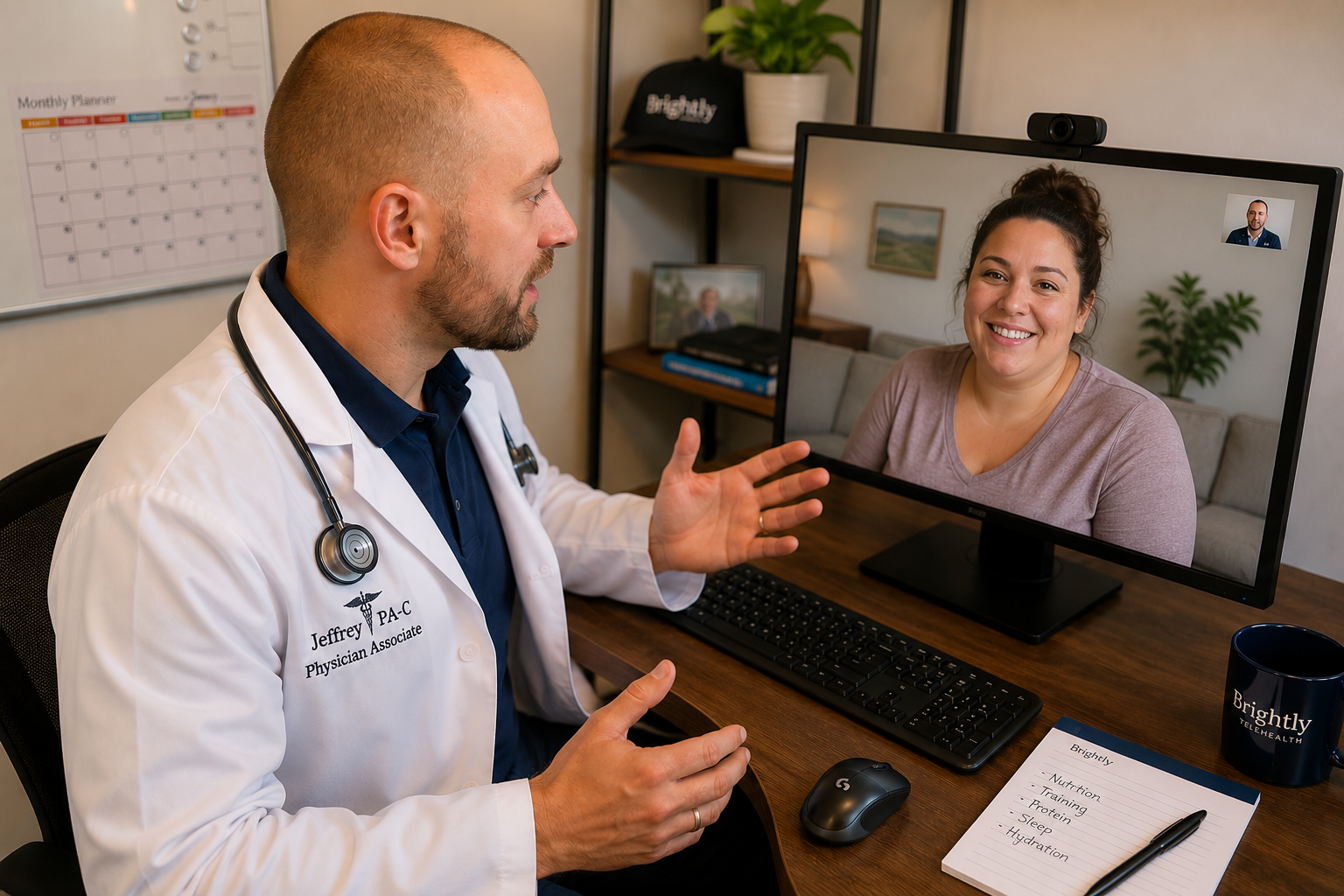
How to Choose the Best GLP-1 Telehealth Clinic in Washington: 7 Things to Compare Before You Start
The cheapest semaglutide or tirzepatide program is not always the best value. Here is how to compare Washington GLP-1 clinics based on clinician access, medication sourcing, transparent pricing, nutrition coaching, muscle preservation, side-effect support, and long-term maintenance.
The best GLP-1 telehealth clinic in Washington is not necessarily the company advertising the lowest monthly price. Look for transparent medication costs, direct access to a consistent clinician, reputable pharmacy sourcing, individualized dosing, side-effect support, nutrition and strength-training guidance, and a realistic plan for maintaining your results after active weight loss.
If you are comparing semaglutide, tirzepatide, or online GLP-1 weight loss programs in Washington, you have probably noticed that prices are all over the place.
Some national telehealth companies advertise an extremely low introductory price. Others bundle medication, visits, and support into one monthly payment. Some charge a membership fee and then add medication, shipping, supplies, or dose-related fees later.
Price matters. But it is only one part of the decision.
A GLP-1 program should not simply help you access medication. It should help you use that medication safely, manage side effects, nourish your body when your appetite is lower, preserve muscle while losing fat, and create a plan you can maintain over time.
"The lowest price is only a good value if the program gives you the care and support you need to succeed."
— Jeff Carroll, PA-C, MCHSThe Hidden Cost of the Cheapest GLP-1 Program
Two online GLP-1 clinics can appear nearly identical on the surface while offering very different levels of care.
Some low-cost services are primarily designed to review an online intake, determine basic eligibility, and provide medication refills. That approach may work for someone who already understands nutrition, strength training, medication dosing, and side-effect management—and rarely needs help.
For many patients, however, the questions begin after treatment starts:
- How much protein should I eat when my appetite is low?
- What should I do if I develop nausea, reflux, or constipation?
- Should my dose increase if I am already losing weight?
- How do I protect my muscle and strength?
- What should I eat before or after my injection?
- What happens when my weight loss slows down?
- How do I avoid regaining the weight after reaching my goal?
If support is not included, a cheaper program can leave you paying for separate nutrition help, unnecessary supplements, additional medical visits, or trial-and-error decisions made without individualized guidance.
The more important cost may be losing muscle unnecessarily, stopping medication because manageable side effects were not addressed, or reaching your goal weight without any plan for maintaining it.
| What to compare | Low-cost prescription service | Comprehensive GLP-1 program |
|---|---|---|
| Primary focus | Medication access and refills | Medication, medical care, education, and coaching |
| Clinician relationship | You may rotate between different clinicians | You work with a clinician who knows your history and goals |
| Questions between visits | Messaging may be limited, delayed, or routed through support staff | Direct clinical support is available between scheduled visits |
| Nutrition | Generic meal advice or downloadable handouts | Practical guidance for protein, fiber, hydration, and meal planning |
| Exercise | May focus on burning calories or simply “moving more” | Includes muscle-preservation and resistance-training guidance |
| Side effects | Standardized advice or a delayed follow-up visit | Personalized help based on your symptoms, dose, and health history |
| Long-term plan | Often focused on active weight loss and monthly refills | Includes plateaus, maintenance, and life after reaching your goal |
Questions I Would Ask If My Own Family Member Were Shopping for a GLP-1 Clinic
If someone close to me asked which semaglutide or tirzepatide clinic they should choose, I would not tell them to automatically select the cheapest option.
I would encourage them to ask:
- Who will actually manage my care? Is it the same clinician over time or a rotating provider network?
- Can I contact my clinician between visits? Who responds if I develop side effects or have a dosing question?
- Does the program include nutrition coaching? Will anyone help me eat enough protein and fiber when my appetite drops?
- Will someone help me preserve muscle? Does the clinic discuss resistance training, strength, and body composition?
- Where does the medication come from? Will the clinic identify the dispensing pharmacy and explain the medication clearly?
- Are all costs disclosed? Does the advertised price include medication, shipping, visits, supplies, and dose changes?
- What happens after I reach my goal? Is maintenance part of the treatment plan or does the support end with active weight loss?
7 Things Every Washington Patient Should Compare Before Signing Up
Side effects, missed doses, appetite changes, travel questions, and nutrition concerns do not always happen during a scheduled monthly visit.
Ask whether secure messaging is included, who will answer your questions, and whether you will work with the same clinician over time.
GLP-1 medications can reduce appetite substantially. That makes the food you do eat more important—not less important.
A quality program should help you prioritize protein, increase fiber gradually, stay hydrated, manage smaller meals, and avoid becoming so restrictive that you feel weak or lose unnecessary muscle.
Weight loss can include both fat and lean tissue. Adequate protein and resistance training help tell your body that your muscle is still needed.
Ask whether the program offers realistic strength-training guidance for your current fitness level—not just instructions to eat less and do more cardio.
Nausea, constipation, reflux, bloating, diarrhea, fatigue, and reduced appetite may occur during treatment.
Your clinic should explain what you can manage at home, when the dose may need adjustment, and which symptoms require urgent or in-person care.
Ask whether the advertised price includes clinical care, medication, shipping, supplies, messaging, follow-up visits, coaching, and higher-dose pricing.
You should be able to understand what you are paying the clinic for care and what you are paying the pharmacy for medication.
Ask which pharmacy will fill your prescription, where it is located, how the medication will be shipped, and whom you can contact with dispensing questions.
A legitimate clinic should be willing to clearly identify the pharmacy and explain what is being prescribed.
Many programs explain how to start treatment but provide very little information about maintenance.
Ask how the clinic approaches plateaus, long-term medication decisions, strength training, nutrition, appetite changes, and prevention of weight regain.
Prescription vs. Partnership: There Is a Difference
Access to medication is valuable, but patients often need more than a prescription.
A prescription-focused service primarily asks:
"Can this patient receive this medication?"
A clinical partnership asks additional questions:
- Is the patient eating enough protein?
- Are side effects interfering with daily life?
- Is the patient maintaining strength and muscle?
- Is a higher dose actually necessary?
- Does the exercise plan support long-term health?
- What barriers are making consistency difficult?
- What will maintenance look like?
| Area of care | Prescription-only approach | Clinical partnership approach |
|---|---|---|
| Treatment | Medication is the primary service | Medication is one tool within a larger care plan |
| Dosing | May follow a standardized increase schedule | Reviewed based on progress, appetite, side effects, and goals |
| Success | Measured primarily by scale weight | Considers fat loss, muscle retention, strength, energy, and health |
| Communication | Centered around intake forms and refill requests | Includes ongoing clinician access and individualized guidance |
| Lifestyle | Generic advice may be provided | Nutrition, hydration, exercise, and recovery are part of care |
| Maintenance | May not be discussed until treatment ends | Long-term planning begins before the goal weight is reached |
What Happens After You Reach Your Goal Weight?
Reaching your goal weight should not be the end of the conversation.
It is the point where the focus begins shifting from active weight loss to long-term maintenance.
A comprehensive GLP-1 program should help you reach that stage with more than a lower number on the scale. Ideally, you will also have:
- A repeatable way to build balanced, protein-forward meals
- A realistic daily protein and fiber target
- A consistent strength-training routine
- Better awareness of hunger and fullness signals
- Strategies for restaurants, holidays, travel, and stressful weeks
- A plan for responding to small weight increases early
- A clear discussion with your clinician about medication and maintenance options
Some patients may continue medication as part of long-term chronic weight management. Others may discuss a lower maintenance dose or another strategy with their clinician.
The right approach depends on the individual. It should not be dictated by a generic timeline or a one-size-fits-all protocol.
How Brightly Telehealth Cares for GLP-1 Patients in Washington
Brightly Telehealth is a veteran-founded, family-operated Washington medical practice.
We created the Brightly Weight Loss Program for patients who want more than access to a prescription. Our care model combines medical supervision with practical nutrition and fitness coaching designed to help patients lose fat while preserving muscle and building habits they can maintain.
The Brightly Weight Loss Membership includes:
- Ongoing medical supervision with Jeff Carroll, PA-C
- Direct secure messaging between visits
- Nutrition coaching for protein, fiber, hydration, and meal planning
- Exercise and strength-training guidance
- Personalized support for common medication side effects
- Individualized medication management
- Help navigating plateaus and changing appetite
- Long-term maintenance planning
Transparent membership and medication pricing
The Brightly Weight Loss Membership is $119 per month.
Medication is purchased directly through our pharmacy partner in Renton, Washington. Brightly does not add a medication markup, hidden program fee, or separate shipping upcharge.
This structure lets patients see what they are paying Brightly for clinical care and coaching—and what they are paying the pharmacy for medication.
Medication pricing varies based on the medication and dose and should always be confirmed before enrollment.
Brightly is a veteran-founded, family-operated Washington small business—not a national prescription platform.
We intentionally work with a compounding pharmacy based in Renton because we believe healthcare dollars should support local jobs and communities whenever possible.
That means Washington patients can receive care from a Washington practice while obtaining eligible compounded prescriptions through a Washington pharmacy partner, with clear separation between the cost of clinical care and the cost of medication.
Local care does not replace clinical standards, careful pharmacy selection, or individualized medical decision-making. It adds another layer of accountability and connection: Washington professionals caring for Washington patients.
How Much Does a GLP-1 Weight Loss Program Cost in Washington?
The cost of GLP-1 telehealth treatment in Washington varies based on:
- Whether medication is included in the advertised price
- The medication prescribed
- The prescribed dose
- Whether shipping and supplies are included
- Whether follow-up visits and clinician messaging are included
- Whether nutrition and exercise coaching are included
- Whether the clinic adds a medication markup
Some patients also find that their overall monthly spending changes after treatment begins. Eating smaller portions may reduce spending on restaurant meals, takeout, snacks, or groceries for some people.
That should not be considered guaranteed savings, but it can be useful to evaluate the complete financial picture rather than viewing the monthly program fee in isolation.
"Do not ask only which clinic has the lowest price. Ask what care, support, medication access, and long-term planning are included in that price."
Frequently Asked Questions About Choosing a GLP-1 Clinic in Washington
The Bottom Line
If your only priority is finding the lowest-priced GLP-1 prescription online, many companies are competing for that business.
But if you want a Washington GLP-1 telehealth clinic that combines medication management with nutrition coaching, exercise guidance, side-effect support, transparent pricing, and long-term planning, it is worth comparing more than the monthly fee.
The best program is not necessarily the one that helps you obtain medication for the lowest advertised price.
It is the one that helps you use treatment safely, preserve your health, build sustainable habits, and feel supported throughout the process.
Looking for personalized GLP-1 care in Washington—not just a prescription?
Meet one-on-one with Jeff Carroll, PA-C, ask your questions, and learn whether the Brightly Weight Loss Program may be a good fit for your health, goals, and budget.
Schedule Your Free Consultation →Washington Telehealth · Veteran-Founded · Family-Operated · Clinician-Led
Medical and medication disclaimer: This article is for educational purposes only and does not constitute individualized medical advice, diagnosis, treatment, or a guarantee of treatment eligibility. GLP-1 medications are not appropriate for everyone and may cause side effects. Medication availability, pricing, and applicable compounding rules may change. Compounded medications are not FDA-approved, and the FDA does not review them for safety, effectiveness, or quality before marketing. Medication selection, dosing, and ongoing treatment decisions should be made with a licensed healthcare professional who has reviewed your medical history.